

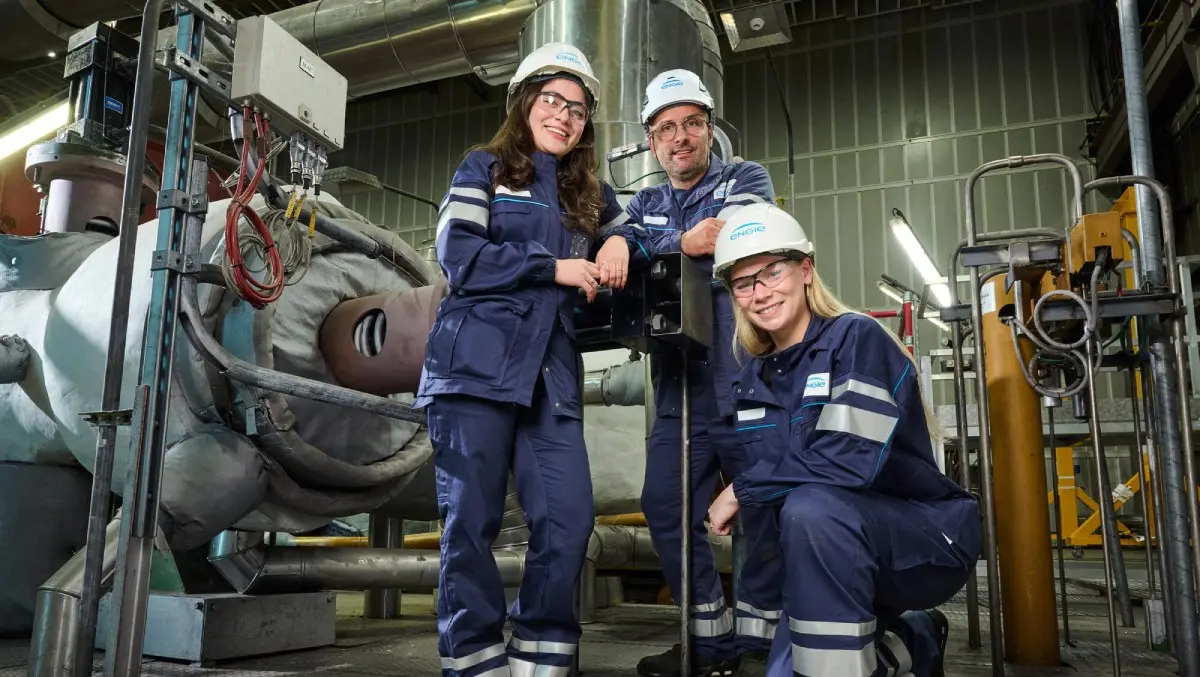



Spotlight on ENGIE’s activities in India
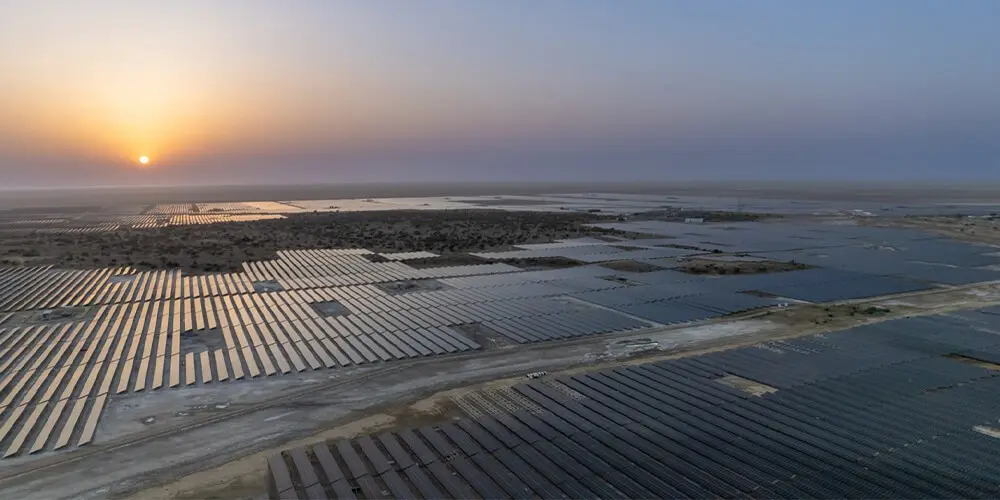
ENGIE is shaping India’s clean energy future by building power systems that are low carbon, reliable, and designed to scale. With a presence in India for over 30 years, and more than a decade of experience in renewable energy operations, ENGIE brings deep market insight, strong execution capability, and a long term commitment to India’s energy transition.
Key figures
|
Today, ENGIE’s renewable portfolio in India exceeds 2 GW, with 1.3 GW under operations and the remaining capacity under construction. As India’s energy landscape evolves, ENGIE is moving beyond capacity creation to strengthening confidence in the country’s clean energy journey, by enabling solutions that are resilient, dispatchable, and grid ready.
Aligned with this vision, ENGIE’s ambition in India is to grow its renewable and storage portfolio to 7 GW (renewables plus storage) by 2030, supporting the country’s accelerating demand for clean, dependable power and contributing meaningfully to India’s long term decarbonization goals.
What are ENGIE’s production capacities in India?
ENGIE now manages 22 solar and wind projects across 7 states, for a total of 2 GW: 1.3 GW in operation in 7 states, with the remaining capacity currently under construction. ENGIE aims to scale renewables to 7 GW by 2030.
This transition is further strengthened through ENGIE Urja.ai, an open innovation platform that brings together domain expertise, advanced analytics, and digital intelligence. By combining physical energy infrastructure with data driven insights, Urja.ai supports smarter operations, improved asset performance, and a more resilient and efficient clean energy ecosystem in India.
What are ENGIE’s other activities?
Tractebel, an ENGIE subsidiary with 850+ professionals in India, provides engineering, consulting, and advisory services across clean energy technologies, transmission & distribution, water systems, and large‑scale transport and urban infrastructure. The company has supported over 70 GW of renewable and storage projects throughout India.
The Supply & Energy Management branch supports merchant optimization, market access, and commercial origination for renewable assets across India. The team partners with developers to secure revenue certainty and maximize market value through structured offtake solutions.
Last, Tabreed, a company that is 40% owned by ENGIE, delivers district cooling solutions in India for government entities and companies. For instance, it provides Cooling as a Service (CaaS) for the Tata Realty commercial campus in Gurugram, a premium real-estate player. It has also signed India’s first district cooling PPP (Private-Public Partnership) with the government complex of Amaravati, the new capital of Andhra Pradesh.
Why is India a priority country for ENGIE?
India is one of ENGIE’s fastest growing and most strategic markets, positioned at a defining moment in its clean energy transition. With a population of nearly 1.5 billion and rapidly rising energy demand, the country combines scale with some of the world’s strongest solar and wind potential, making it central to the global energy transition.
As one of the most ambitious renewable energy markets globally, India has set a bold target of achieving 500 GW of non-fossil fuel capacity by 2030 and advancing toward a Net Zero Carbon pathway by 2045. To meet these goals, the country plans to deploy over 250 GW of new renewable capacity this decade.
This ambition is already translating into action. ENGIE sees India not only as a high growth market, but as a long-term partner in building a resilient, secure, and sustainable energy system.
“ENGIE is focused on supporting India’s transition to a sustainable energy future. By prioritizing innovation, environmental responsibility, and community development, we aim to contribute to meeting the country’s energy needs in a sustainable manner, while strengthening resilience and self reliance.”
What is ENGIE India’s impact on local communities?
ENGIE India also places strong emphasis on community empowerment and sustainable development. The company has:
- trained more than 600 solar module technicians, helping create a skilled and future-ready workforce;
- sourced nearly 80% of its project workforce locally, strengthening community linkages and promoting inclusive growth.
This local-first approach brings valuable skills into the renewable sector, ensures social impact, derisks project execution, and enhances regional economic development—all contributing to a more resilient and equitable energy ecosystem.
Flagship Projects
Raghnesda Solar Power Plant: resilience in action
The 200 MW Raghnesda Solar Power Project in Gujarat’s Banaskantha district exemplifies ENGIE’s ability to deliver under pressure. Commissioned in August 2021 amidst the COVID-19 pandemic, the project was completed in just 18 months with a zero-infection record.
The plant supplies approximately 546 GWh of clean energy annually, offsetting over 387,000 tons of CO₂ emissions. It operates under a 25-year PPA.
Kadapa Solar Power Project: scale with precision
Spanning 5,930 acres in Andhra Pradesh’s Kadapa Ultra Mega Solar Park, this 250 MW project is one of India’s largest commissioned projects till date. It was commissioned in two phases between June 2019 and March 2020. The project uses advanced string inverters to enhance efficiency and system accessibility, and supplies power under a 25-year PPA with NTPC Limited.
Mirzapur Solar Plant: a symbol of Indo-French collaboration
Jointly inaugurated by Prime Minister Narendra Modi and French President Emmanuel Macron, the 75 MW Mirzapur Solar Plant is a landmark in bilateral renewable cooperation. Spread across 385 acres in Dadar Kalan village, the plant uses over 318,000 solar panels to generate 190 million units of clean electricity annually. Commissioned in March 2018, it remains one of Uttar Pradesh’s largest solar projects.
Bhadla Solar Project: innovation in harsh environments
Located in Rajasthan’s high-irradiation Thar Desert, the 140 MW Bhadla Solar Project was the first in India to deploy water-free robotic cleaning systems. These autonomous robots, remotely controlled via a cloud-based platform, combat heavy dust accumulation from desert storms and are expected to save over 2 billion liters of water over the plant’s 25-year lifecycle.
State of Telangana: Asia’s largest district cooling PPP
In 2023, ENGIE was awarded a 32-year district cooling concession for Hyderabad Pharma City, a large-scale, government-led pharmaceutical industrial park. This district cooling Private-Public Partnership (PPP) is the largest in Asia.
Gujarat: ENGIE’s second-largest battery system worldwide
Awarded in November 2025, this 280 MW battery project is ENGIE’s first major standalone storage project in India. Expected to be operational in 2027, it will be ENGIE’s second-largest BESS globally, enabling peak‑time power injection, grid stability, and flexible renewable integration.
Find instantly answers to your questions
What do you want to do?