




ENGIE in Chile: a pioneer of the energy transition in South America
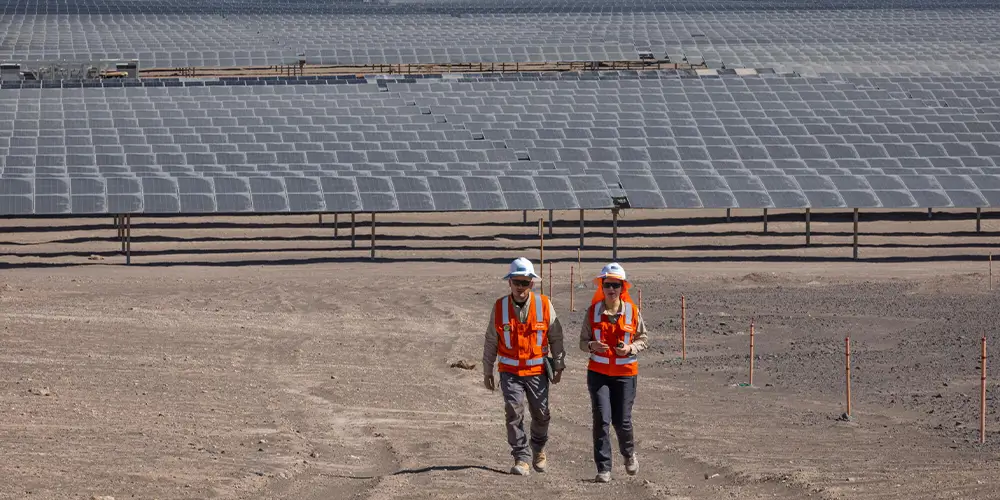
Present in Chile since 1915, when the Chile Exploration Company was established to generate electricity for the country’s northern mining industry, ENGIE is now undergoing a profound transformation. Having fully phased out coal-fired power generation as of December 31, 2025, the company is repurposing its legacy thermal assets while rapidly expanding renewable energy capacity combined with battery energy storage.
With 1,100 employees and 3.1 GW of installed capacity, ENGIE aims to become Chile’s leading energy transition utility by leveraging the exceptional renewable resources of the Atacama Desert and strategic transmission infrastructure to deliver clean electricity from northern production sites to the country’s main demand centers.
Key figures
|
A major player in Chile’s power system
Chile is one of ENGIE’s strategic markets in Latin America. The company operates across the entire energy value chain, including electricity generation, transmission, power supply, and natural gas transportation. This vertically integrated model, which is rare in the region, provides a significant advantage in supporting the country’s ongoing energy transition.
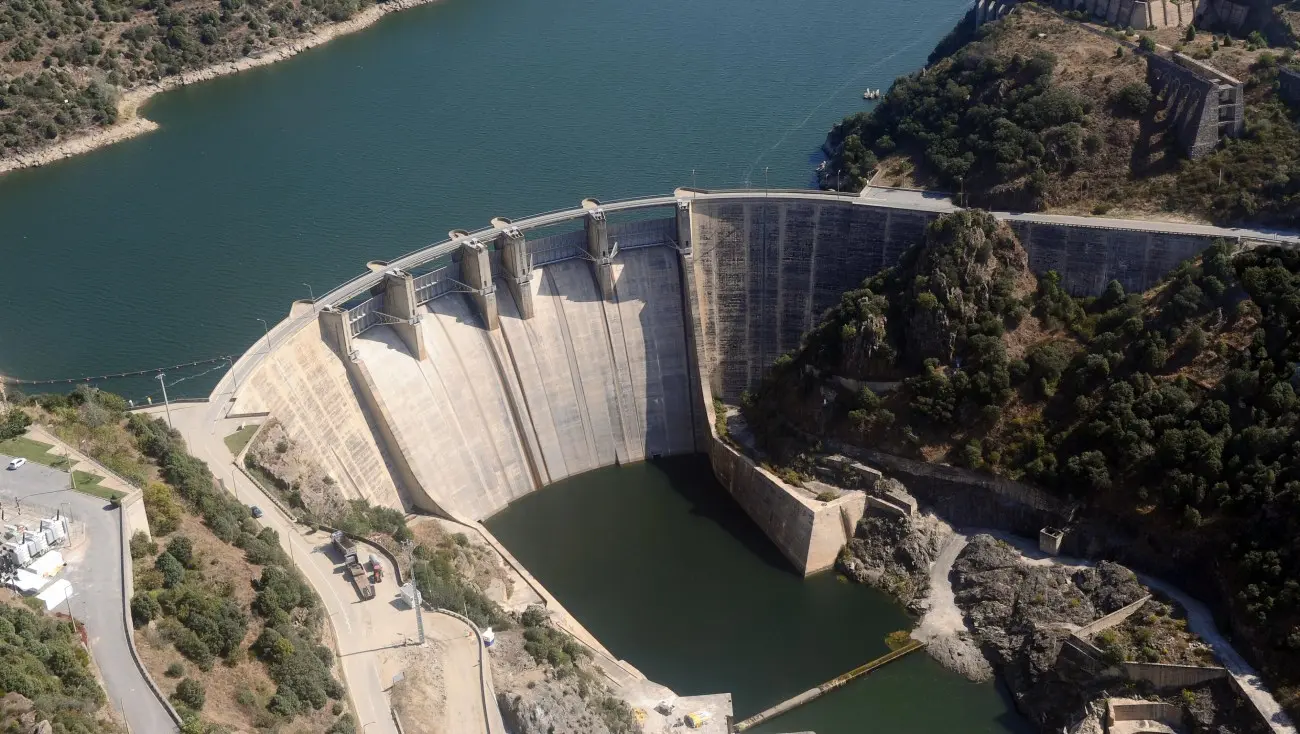
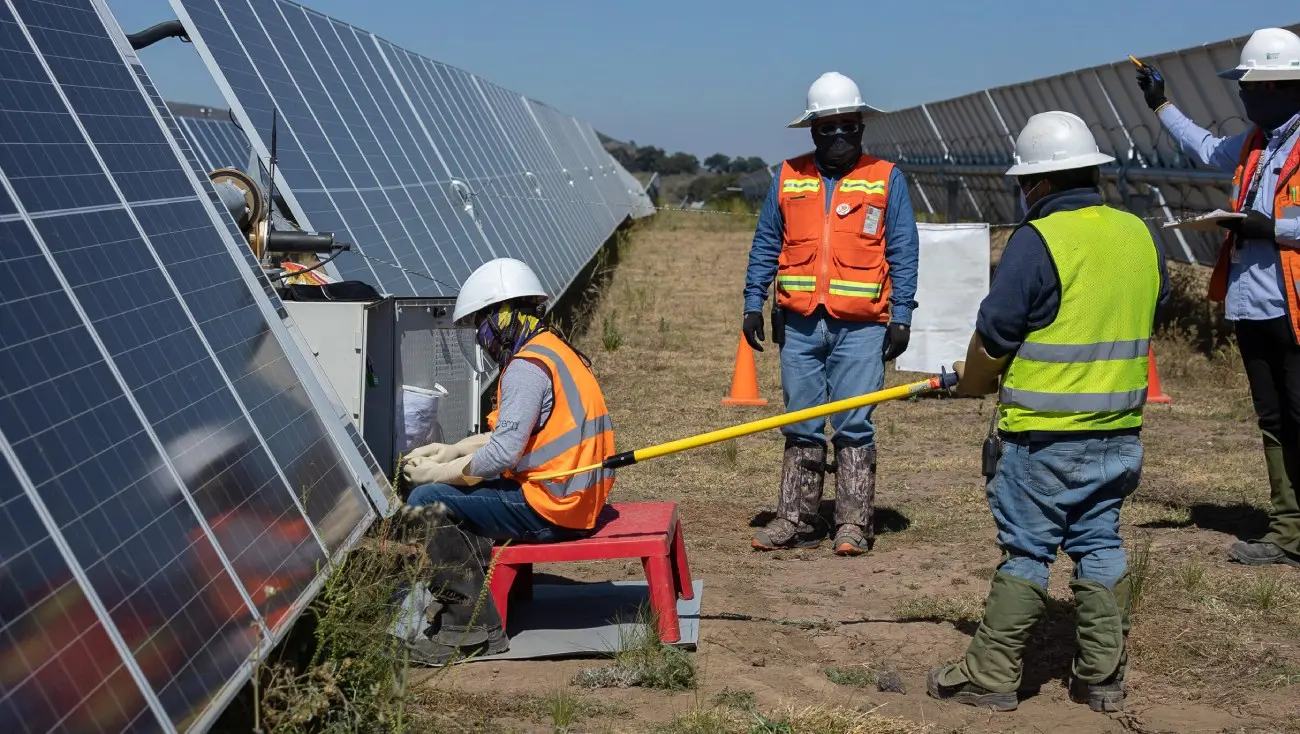
ENGIE Chile operates a portfolio totaling 3.1 GW of installed capacity across 60 sites nationwide, including six solar farms, four wind farms, four battery energy storage systems (BESS), three hydroelectric plants, and one gas-fired power plant currently undergoing conversion. The company also operates more than 2,000 km of electricity transmission lines and 1,100 km of natural gas pipelines. This diversified portfolio makes ENGIE Chile the country’s fourth-largest electricity producer and third-largest transmission operator.
ENGIE’s ambition is to become Chile’s leading utility for the energy transition. To achieve this, the company is investing heavily in expanding its renewable energy portfolio, accelerating battery storage deployment, and repurposing thermal assets, while strengthening system flexibility through natural gas infrastructure, ancillary services, and transmission networks. ENGIE Chile has also been recognized for the third consecutive year among Chile’s 100 most reputable companies, ranking 59th in the 2025 Merco Corporate Reputation Index, while also earning recognition in the Merco Talent, Merco ESG, EDGE Move, and IMAD rankings.

Our objective is clear: to reach 3.7 GW by 2027, with more than 70% coming from renewable energy and battery storage.
Juan Villavicencio, Country Manager, ENGIE Chile
Phasing out coal: a firm commitment to decarbonization
In 2021, ENGIE announced its gradual coal phase-out in Chile, spanning from 2022 through the end of 2025. Unlike several competitors that chose to sell their coal-fired assets, ENGIE opted for permanent closure without transferring ownership to third parties. Although more demanding, this approach is fully aligned with ENGIE’s global commitment to eliminate coal-fired power generation worldwide by 2027.
Mejillones: converting the IEM plant to natural gas
At Mejillones, ENGIE’s second-largest thermal power complex in Chile, two coal-fired generating units were dismantled at the end of 2025. The 377 MW IEM (Infraestructura Energética Mejillones) power plant is currently being converted to natural gas and is expected to begin operations by July 2026.
This conversion demonstrates ENGIE’s ability to transform legacy assets into future-ready infrastructure by leveraging new technologies to maintain system reliability while significantly reducing carbon emissions.
The entire process is being carried out in close consultation with local communities through dedicated working groups that include port workers and artisanal fishermen. ENGIE also supports local nonprofits and small businesses each year, helping ensure that the closure of fossil fuel assets becomes a catalyst for regional economic development.
Tocopilla: a just transition to decommissioning
Located on Chile’s northern coast, the Tocopilla thermal power complex once played a central role in the local economy. ENGIE shut down coal-fired Units 12 and 13 (0.7 GW combined) in 2019 before dismantling them in 2022. Units 14 and 15 were retired later that same year, marking ENGIE’s complete exit from coal generation in Tocopilla.
The closure affected 90 employees, all of whom were supported through a Just Transition program launched in January 2019. One-third received training for new careers, through more than 14,000 hours of training: wastewater treatment operations, solar panel installation and maintenance, wind turbine maintenance, and entrepreneurship. Another third opted for early retirement, while the remaining employees participated in a voluntary separation program.
From an environmental standpoint, nearly 15,000 metric tons of materials were recycled during the project, making it Chile’s first large-scale thermal power plant decommissioning.
Chile’s leader in battery energy storage
Chile enjoys the world’s highest levels of solar irradiation in the Atacama Desert, complemented by highly favorable wind resources. Fully harnessing this renewable potential requires storage systems capable of smoothing intermittent generation and delivering electricity during peak demand periods.
ENGIE has established Chile as one of its global centers of excellence for battery energy storage, already operating four utility-scale BESS facilities.
BESS Coya: Latin America’s largest battery storage system
Commissioned in March 2024 in the Antofagasta Region, BESS Coya is the largest battery energy storage system in Latin America. With 139 MW of installed capacity and 638 MWh of storage capacity, the facility is paired with the 180 MWac Coya solar power plant. Its 232 battery modules store up to five hours of solar generation and dispatch electricity during periods of peak demand.
BESS Coya supplies approximately 200 GWh of renewable electricity annually—enough to power roughly 100,000 Chilean households—while avoiding approximately 65,000 metric tons of CO₂ emissions each year.
Pampa Fidelia and Chequenes: new wind farms under construction
ENGIE Chile continues expanding its wind portfolio through two major projects whose first wind turbines were installed in November 2025. In Taltal, in the Antofagasta Region, the Pampa Fidelia wind farm will feature 51 turbines with a combined capacity of 306 MW, enough to supply electricity to approximately 300,000 households while avoiding 91,000 metric tons of CO₂ annually. In Pemuco, in the Ñuble Region, the Chequenes wind farm will have a capacity of 165 MW generated by 22 next-generation GW182 turbines rated at 7.5 MW each and standing 230 meters (755 feet) tall. It will be the first wind project in the region. Commercial operation is expected by the end of 2026. The project will supply electricity to roughly 100,000 households while avoiding approximately 40,000 metric tons of CO₂ emissions annually.
Transmission infrastructure: the backbone of Chile’s energy transition
Chile’s energy transition faces one fundamental challenge: without transmission, there is no transition. Renewable energy and battery storage can only be fully integrated if the electricity grid can transport power from remote production areas (including the Atacama Desert and the country’s windy southern regions) to major population and industrial centers. ENGIE Chile has become a key player in this backbone infrastructure by operating more than 2,000 km of transmission lines, making it Chile’s third-largest electricity transmission operator.
TEN: Chile’s first north-central interconnection
Commissioned in October 2017, the Transmisora Eléctrica del Norte (TEN) transmission line synchronized, for the first time, Chile’s two main electricity systems: the Northern Interconnected System (SING) and the Central Interconnected System (SIC). Owned equally by ENGIE and Red Eléctrica International, TEN operates a 500 kV transmission line stretching 600 km between Mejillones (Antofagasta Region) and Cardones (Atacama Region). The project mobilized more than 5,000 workers and includes 1,350 transmission towers exceeding 80 meters (262 feet) in height, 15,000 km of conductor cable, and four substations, including Los Changos, the largest substation in Chile. TEN marked the beginning of a unified national power grid that is more resilient, more competitive, and better equipped to integrate northern Chile’s rapidly expanding solar and wind generation.
Three new substations in central Chile
ENGIE Chile further strengthened its transmission business after being awarded three strategic projects under the country’s latest “New Works” transmission tender: the Huelquén, El Peral, and Quelmen substations. These facilities transform voltage levels to enable long-distance power transmission before electricity is distributed to consumers. Located in central Chile, the new substations reinforce ENGIE’s network expansion while contributing to a safer, more reliable, and more resilient power system capable of integrating increasing volumes of renewable energy.
Energy Solutions for Mining and Sustainable Mobility
As the world’s leading producer of copper and lithium, Chile’s mining industry is one of the country’s largest electricity consumers. ENGIE supports major mining companies in decarbonizing their operations by supplying renewable electricity combined with battery storage and system flexibility solutions. This strategy helps secure energy supply for a sector that is critical to Chile’s economy while enabling mining companies to meet increasingly stringent climate and ESG commitments demanded by global customers.
Beyond power generation, ENGIE is also deploying practical solutions to decarbonize end uses, particularly urban transportation. In 2018, ENGIE was awarded the contract to supply 100 electric buses to the city of Santiago: half of the first 200 electric buses introduced into Chile’s capital in 2019. ENGIE’s integrated solution includes vehicle leasing, charging infrastructure installation and maintenance, all powered by 100% certified renewable electricity. The project supports Chile’s Third Millennium Transportation Plan, which aims to achieve a carbon-neutral public transportation system by 2040.
Frequently Asked Questions
When will ENGIE stop producing electricity from coal in Chile?
ENGIE committed to ending coal-fired power generation in Chile by the end of 2025. The company has already retired the coal-fired units at Tocopilla (in 2019 and 2022) and dismantled the final two coal units at Mejillones at the end of 2025. The IEM plant, located at the same site, is being converted to natural gas and is expected to be operational by July 2026. Unlike several competitors, ENGIE chose to exit coal without selling its coal assets.
What is the BESS Coya project?
Located in Chile’s Antofagasta Region, BESS Coya is Latin America’s largest battery energy storage system. Commercially operational since March 2024, it has 139 MW of installed capacity and 638 MWh of storage capacity. Connected to the 180 MWac Coya solar power plant, it stores solar energy generated during the day and delivers it to the grid during peak demand periods, supplying approximately 200 GWh of renewable electricity annually while avoiding 65,000 metric tons of CO₂ emissions each year.
What role does ENGIE play in Chile’s electricity transmission system?
ENGIE is Chile’s third-largest electricity transmission operator, managing more than 2,000 km (1,240 miles) of transmission lines. Its TEN subsidiary (jointly owned 50/50 with Red Eléctrica International) operates the country’s first high-voltage transmission line linking northern and central Chile: a 600 km, 500 kV line that enabled the first synchronization of Chile’s two main electricity systems in 2017. These transmission assets are essential for delivering renewable electricity generated by solar and wind farms in the Atacama Desert to residential and industrial customers throughout the country.
How many people does ENGIE employ in Chile?
ENGIE Chile employs approximately 1,100 people across its generation facilities, offices, and support functions. The company is regularly recognized among Chile’s top employers, earning distinctions in the Merco Talent, EDGE Move, and IMAD rankings.
Find instantly answers to your questions
What do you want to do?