




Decarbonization of businesses: action!
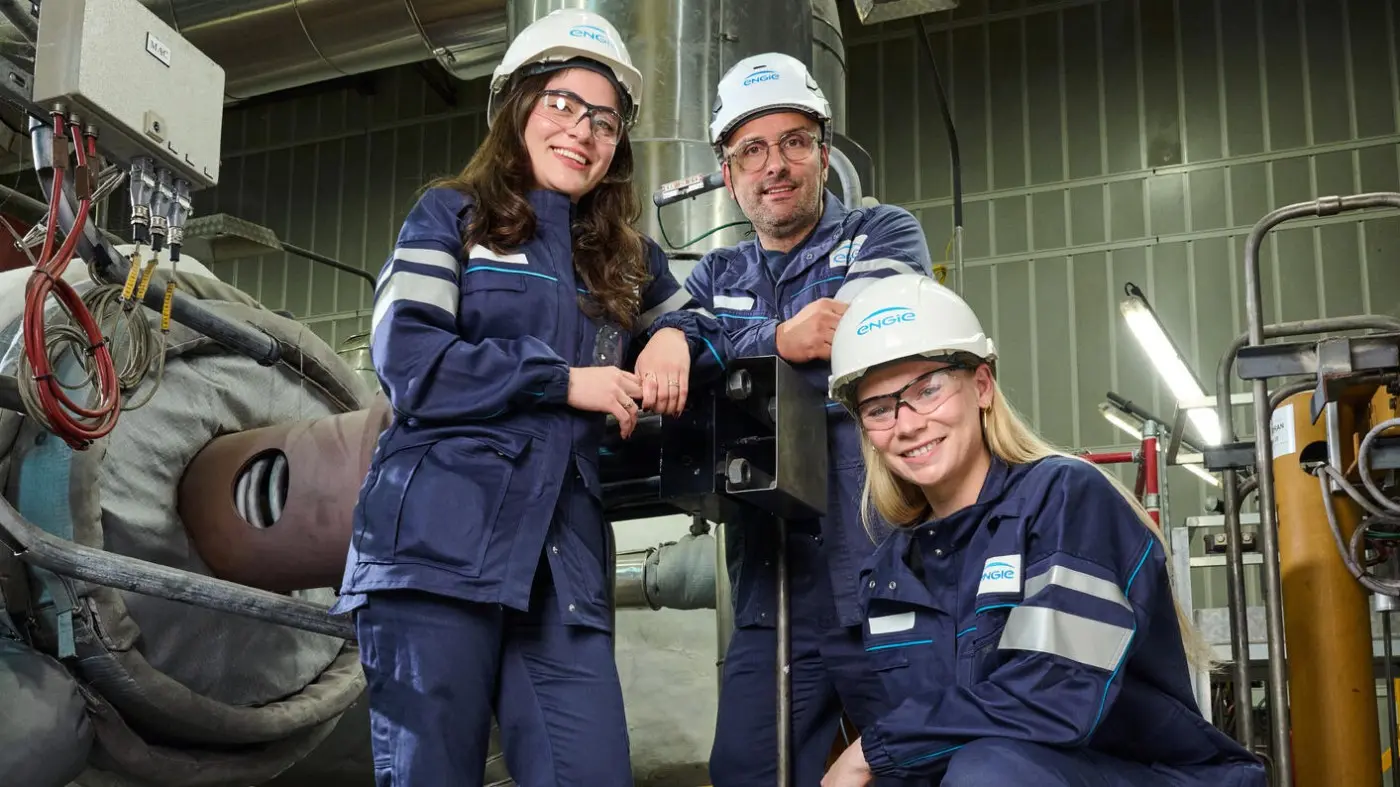
The climate emergency is urging our economies to become net zero carbon. Since the Paris Agreement in 2015, national governments, regions and organisations have announced their net zero carbon goals. The scientific community and a growing number of committed stakeholders and businesses have helped to identify the actions that must be taken. This feature explains how ENGIE is helping businesses achieve their net zero carbon transition.
How do we make decarbonization happen?
A precise roadmap, strategies to reduce energy consumption, solutions to decarbonize industrial production and service-sector sites, etc. Discover ENGIE’s 360° decarbonization offer.
According to scientists, humanity only has three years to ensure we have a world we can live in. The aim is to decarbonize human activities. But what does this mean exactly? What goals have been set in this respect? And practically speaking, how do we go about decarbonizing? Read more

Decarbonizing business now!
Following on from governments and regions, the private sector is now tackling decarbonization in a tense international context. What challenges and goals are businesses facing?

Decarbonization: ENGIE supports its clients locally
Decarbonization is at the heart of ENGIE’s strategy: the Group announced that it avoided 25 million tons (Mt CO2e) of greenhouse gas emissions for its clients in 2023 and aims for 45 Mt CO2e by 2030. What solutions and innovations does ENGIE use to support its clients? Frank Lacroix, ENGIE’s Deputy CEO in charge of Energy Solutions activities, explains.

85% of companies have set net zero carbon targets, only one in four are on track to achieve them.
Solutions & business cases… decarbonization in action
Green PPAs, renewables and green hydrogen, energy efficiency, recovering waste heat, etc. All our decarbonization solutions.
“By 2030, our solutions may have helped our customers avoid more than 45 million tonnes of CO2 emissions by stepping up their decarbonization processes.“

How the mining industry is using green hydrogen to reduce its carbon footprint
Can green hydrogen help to significantly reduce the mining industry’s carbon footprint? Yes, because it can be used as a fuel for heavy-duty vehicles, an energy source for generating “hydrogen electricity” to power production processes, and a raw material for making explosives. It has caught the interest of the mining industry for all these reasons, and ENGIE is strategically placed to advise and support industry players.
BASF & ENGIE: a PPA to decarbonize electricity consumption
In late 2021, ENGIE and BASF signed a 25-year Power Purchase Agreement for renewable energy in Europe. Under the terms of this PPA, which came into effect in January 2022, ENGIE will provide BASF with up to 20.7 terawatt hours of renewable electricity.
Yoplait & ENGIE: a district heated by waste energy
In Vienne (Isère, France), ENGIE Solutions, Yoplait Productions France and city authorities have joined forces to use the energy generated by the Yoplait plant to heat the district. Another step in the transition to decarbonized heat!
TotalEnergies & ENGIE: using green hydrogen to decarbonize an industrial site
TotalEnergies is partnering ENGIE to reduce the carbon footprint of its La Mède biorefinery. Together, they are developing the Masshylia project for launch in 2024, when it will become the first French site for the production of renewable hydrogen on an industrial scale.
What do you want to do?