

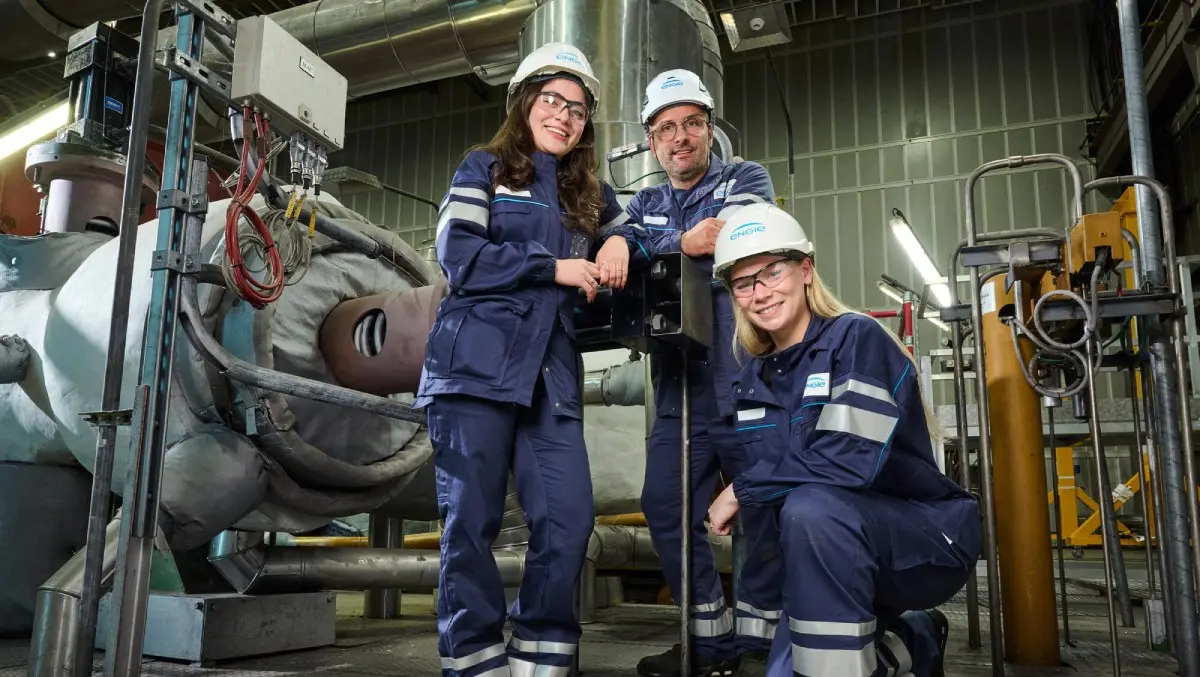



Reliable, low-carbon and competitive energy for businesses and local authorities
ENGIE supports businesses, industrial players and local authorities in securing and optimizing their energy supply. In 2025, we delivered approximately 159 TWh of gas and 147 TWh of electricity to more than 200,000 B2B customers across five continents, including 800 key accounts.
Through an integrated approach combining energy supply, decarbonization solutions and consumption management, ENGIE supports its B2B customers in addressing three key challenges: ensuring reliable energy supply, achieving their climate targets and controlling their energy costs.
Our solutions
Energy supply
We offer businesses and local authorities a comprehensive range of electricity and gas supply solutions. Around 800 major clients, including L’Oréal, Google, Microsoft and Sanofi, trust us.
ENGIE continues to innovate and has developed a renewable electricity offering – 24/7 Carbon-Free Energy – that goes beyond annual green energy supply. It matches a site’s electricity consumption hour by hour with generation from dedicated and local renewable assets. This ensures traceable, verifiable electricity managed in real time, while supporting the development of new renewable projects and enhancing grid resilience.
For example, we have deployed this solution for the Einstein Bros.® Bagels restaurant chain in Texas. We provide a 24/7 renewable electricity solution by matching approximately 90% of the hourly electricity consumption of 25 restaurants with renewable energy certificates from a portfolio of wind and solar assets.
In January 2026, we also strengthened our 24/7 partnership with Google Germany, initially launched in 2021 and extended through 2030. The agreement now includes battery storage and additional renewable energy purchase agreements, further supporting our client’s decarbonization efforts.
In addition, in 2025 ENGIE signed 4.8 GW of renewable electricity contracts (PPAs). ENGIE ranks #1 worldwide in supplying these contracts to corporates (cPPAs), according to BloombergNEF 2026. Since 2011, ENGIE has contracted 13.8 GW of cPPAs, making it the global leader over the 2011–2025 period.
This performance reflects the strength of our renewable development model and has been driven by major transactions with leading technology companies such as Apple, Google and Meta, as well as by the continuous expansion of our B2B customer base.
We have also extended this model to green gases through BPAs (Biomethane Purchase Agreements), securing long-term supply for major industrial players such as BASF, PepsiCo, Arkema and Sanofi. ENGIE continues to expand its biomethane portfolio, targeting 30 TWh marketed per year by 2030 to support the decarbonization of industrial uses.
Consumption management
To help our customers better manage their energy consumption, we develop digital solutions based on data and real-time optimization. These tools enable them to monitor usage, anticipate peak demand and better control their energy costs.
Energy performance
ENGIE supports businesses and organizations (local authorities, healthcare, housing and the tertiary sector) in reducing their energy consumption, CO₂ emissions and costs, while maintaining a high level of comfort for users.
Following a detailed energy audit, we identify key consumption drivers and priority improvement levers. We then define objectives and indicators aligned with each client’s energy strategy and implement efficiency and decarbonization actions, including:
- Optimization and renovation of thermal production systems
- Smart equipment management
- Decarbonization of energy mixes through increased use of renewable and recovered energy
- Optimization of heating and cooling systems
- Building renovation
- Regulatory and financial support, particularly in France through Energy Savings Certificates (CEE), which provide financial incentives
To ensure results, ENGIE makes contractual commitments on the energy savings achieved. In France, for example, Energy and Carbon Performance Contracts (CPEC) guarantee improvements in both energy performance and CO₂ emissions.


Find instantly answers to your questions
What do you want to do?