

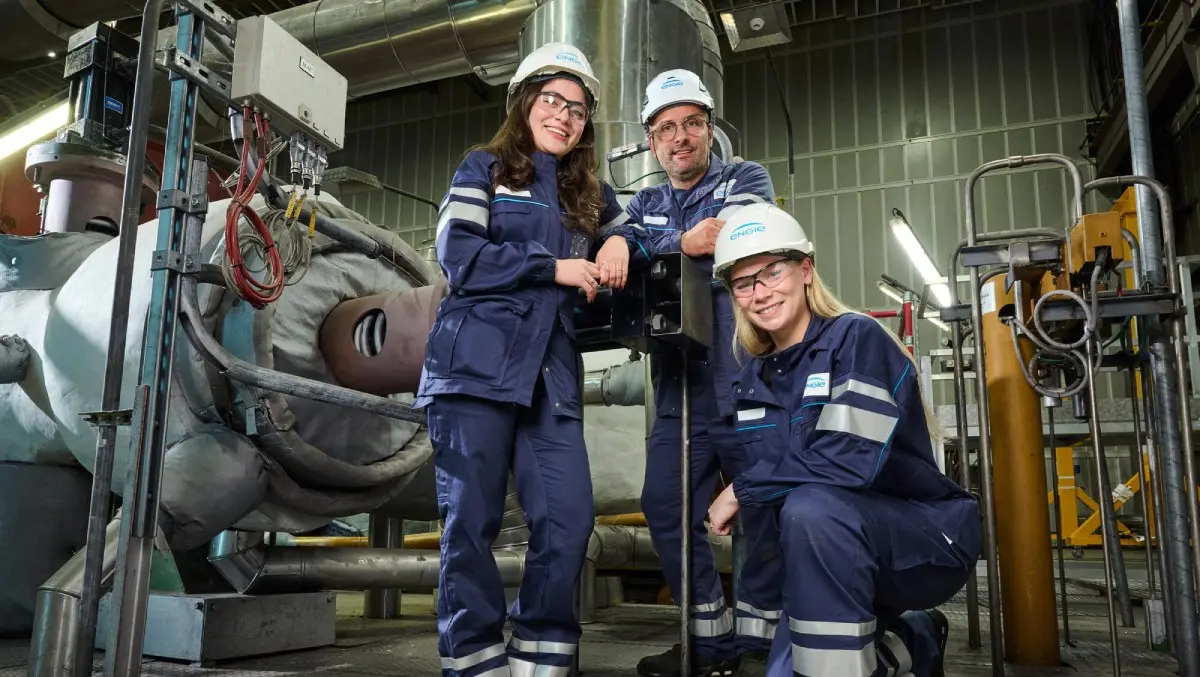



ENGIE, a partner to businesses and local authorities in reducing their carbon footprint
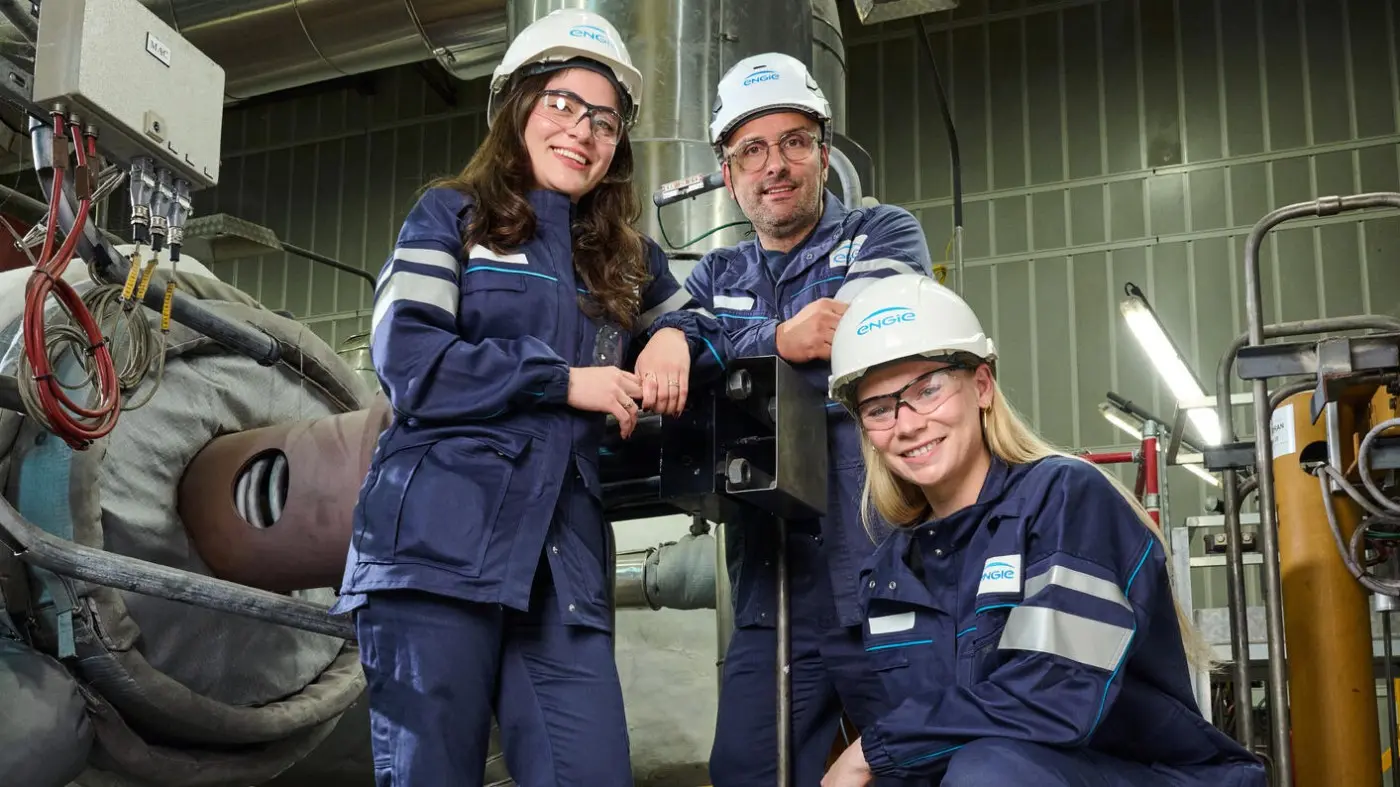
ENGIE designs and operates low-carbon energy solutions directly on industrial sites and in public and private tertiary buildings. The objective: to provide our customers with reliable access to local, lower-carbon energy, while improving control over their costs.
ENGIE operates directly on its industrial and tertiary clients’ sites to manage and optimise all their energy uses (electricity, gas, steam, compressed air, hydrogen), as well as water and cooling systems. With a dual objective: reducing both costs and carbon footprint.
For example, a factory may install photovoltaic panels, upgrade to a higher-efficiency boiler, schedule machines to operate when electricity prices are lower, or reuse cooling water instead of discharging it. A chemicals company may replace part of its natural gas consumption with biomethane; a food industry player may reuse heat from ovens to produce steam; a data centre may recover waste heat from its servers to supply nearby buildings.
The stakes are significant: according to the International Energy Agency (IEA), industry accounts for nearly 40% of global energy consumption, while buildings represent around 30%.
ENGIE aims to produce 20 terawatt-hours (TWh) of decarbonised energy on its customers’ sites – including district heating and cooling networks – by 2030.
Our offer is based on two pillars
- The use of local and renewable energy sources: solar thermal, geothermal, biogas, etc.
- Energy efficiency: through smart management tools enabling customers to better control their energy consumption
Our range of solutions for industry
Waste heat recovery captures energy lost during industrial processes and reuses it—for example, in other stages of production or for heating buildings.
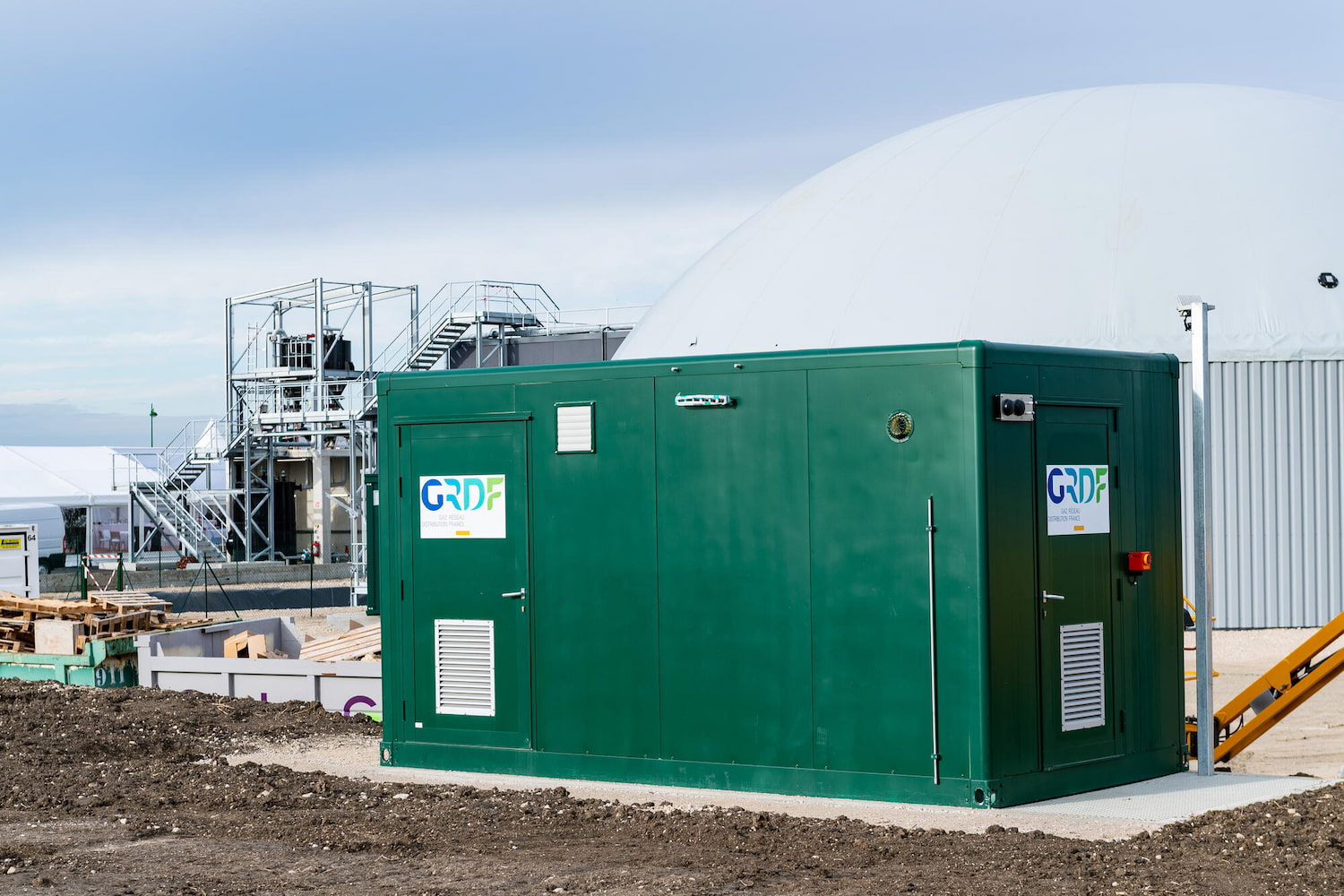
Biomass and biogas boilers generate heat from local resources such as forestry residues or agricultural and industrial waste, thereby contributing to local energy security.
Cogeneration enables the simultaneous production of heat and electricity with high efficiency, and can use decarbonised fuels such as biogas or biomass instead of natural gas. Trigeneration adds cooling production to heat and electricity generation.
Solar thermal energy converts solar radiation into heat using collectors typically installed on rooftops. The resulting heat can be used for domestic hot water or heating systems.
Geothermal energy captures naturally occurring heat from underground sources, particularly groundwater, through drilling. This heat is then used to supply heating systems, industrial processes or district heating networks.
Green hydrogen, produced on-site or remotely, can replace “grey” hydrogen (produced from fossil fuels) in certain industrial processes such as oil refining, ammonia and solvent production, or iron ore processing.
Some of these technologies also enable the recovery and reuse of by-products and waste generated by industrial activities and their surrounding areas, in a circular economy approach.
For tertiary-sector clients, ENGIE also provides energy efficiency solutions. In France, for example, ENGIE signs Energy Performance Contracts that guarantee a certain level of energy savings, with financial compensation mechanisms if targets are not met.
Three key benefits for our customers
Our on-site energy solutions enable our customers to:
- reduce their CO₂ emissions,
- control their energy costs through more efficient installations and self-consumption, while improving visibility on energy expenses and limiting exposure to market price volatility,
- enhance their industrial performance.
Client cases
A carbon-neutral logistics operator at the Port of Antwerp
Luik Natie, the first carbon-neutral logistics operator at the Port of Antwerp in Belgium, partnered with ENGIE to equip its facilities with solar panels, battery storage systems and electric vehicle charging stations, in addition to an existing wind turbine.
To optimise self-consumption of this renewable energy, ENGIE also deployed a closed distribution network connecting the client’s two neighbouring industrial sites.
Decarbonising 22 Airbus industrial sites in Europe
Photovoltaic panels, heat pumps, biomass boilers, low-energy lighting and smart metering systems: the solutions deployed by ENGIE for Airbus support the aerospace group’s objective of reducing energy consumption by 20% and cutting greenhouse gas emissions by 85% across its sites in France, Germany and Spain by 2030.
Optimising energy consumption in Florence, Italy
ENGIE manages the air conditioning systems of the University of Florence, the local centre of the National Research Council, and the Istituto degli Innocenti, a historic building over 600 years old.
ENGIE has also improved the energy performance of the city’s administrative buildings and modernised public lighting in the municipalities of Dicomano and Vicchio.
In parallel, the municipality entrusted ENGIE with improving the energy efficiency of more than 400 buildings, including the Palazzo Vecchio and the Santo Spirito convent, while preserving visitor comfort.
Waste heat recovery in a fermentation plant
In northern France, ENGIE installed two high-capacity heat pumps to reuse heat generated by the fermentation process of Lesaffre, a leading company in the sector. This recovered heat is then used in another stage of the production process: drying.
Find instantly answers to your questions
What do you want to do?