

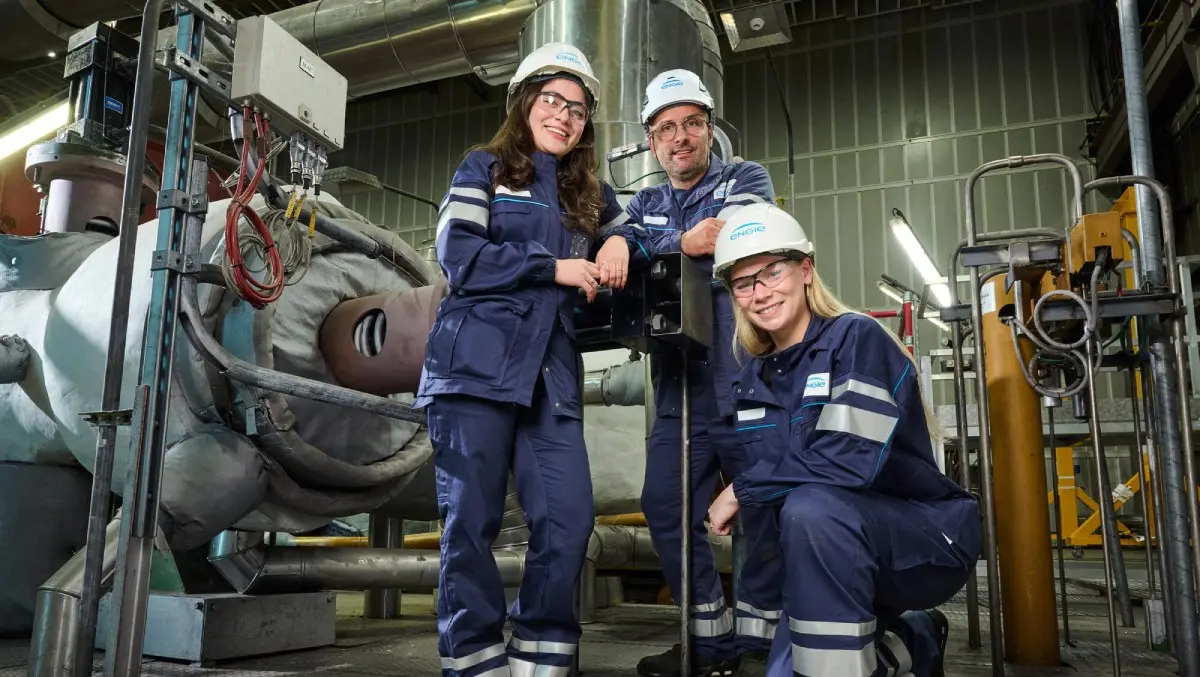



ENGIE, a global player in local energy networks
The world’s leading operator of cooling networks and the third-largest operator of heating networks, ENGIE is a benchmark global player, with 372 networks operated in 14 countries. By 2030, we aim to further expand our footprint and reach 550 heating and cooling networks. This growth builds on our multi-energy expertise, integrating geothermal energy, waste heat and heat recovery, biomass and natural gas.
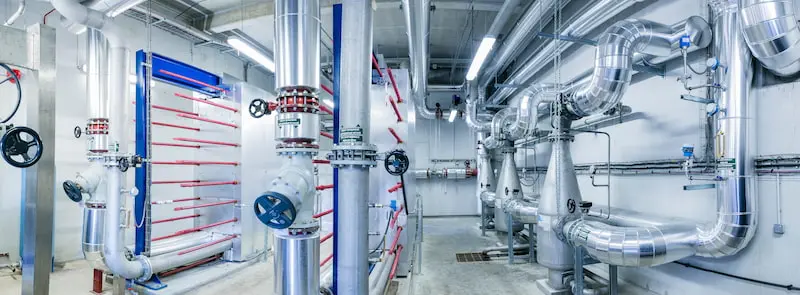
According to Eurostat, the energy used for heating and cooling represents around half of the European Union’s gross final energy consumption.
Designed at the scale of districts, cities or metropolitan areas, local energy networks make it possible to produce and deliver final energy (heat, steam, cooling or electricity) while optimizing the use of locally available resources such as biomass, geothermal energy, solar thermal energy and seawater energy, and deploying high-efficiency technologies.
For our customers – local authorities and economic stakeholders – these solutions offer several key advantages:
- significant reductions in greenhouse gas emissions
- a proven industrial solution
- infrastructure adaptable to local characteristics and resources
Heating and cooling networks: a strategic asset for ENGIE’s decarbonization
ENGIE operates 11.7 GW of heat production capacity and 4.4 GW of cooling capacity worldwide. We rely on recognized expertise in the design, financing, construction, operation and modernization of complex energy networks. These local energy networks enable our clients to significantly reduce their emissions. In 2025, they helped avoid 1.9 Mt of CO₂ (compared with 1.6 Mt in 2024).
The share of renewable and recovered energy in the energy mix supplying our networks continues to grow. In 2024, it reached 48% in France, 11% in Europe and 15% in the rest of the world. In 2025, it rose to 53% in France, 19% in Europe and 14% in the rest of the world. Our ambition is to achieve net zero carbon by 2045.
Our objectives by 2030
Heating networks: a key infrastructure for low-carbon cities
ENGIE operates 256 heating networks worldwide, helping to decarbonize residential districts and commercial buildings.
Cooling networks: a sustainable response to urban climate challenges
Once perceived simply as a comfort feature, air conditioning has become a public health, economic continuity and urban attractiveness issue. Through its stake in Tabreed, a major district cooling operator in the Middle East, ENGIE ranks first worldwide with 116 cooling networks in operation.
ENGIE aims to strengthen this leadership by supporting cities in adopting sustainable and efficient cooling solutions. By producing cooling centrally and efficiently, cooling networks consume less energy, integrate more renewable or recovered energy sources and emit far less CO₂ than individual air-conditioning systems.
Our heating and cooling networks worldwide
Local renewable energy sources mobilized
We adapt to the specific characteristics and resources of each territory to supply our networks: geothermal energy, heat recovery from wastewater, industrial waste heat, waste-to-energy, aquathermal energy (free cooling), seawater energy, solar thermal energy, biomass and biomethane. These local resources are mobilized within a circular economy approach.
Our references
Versailles switches to geothermal energy with ENGIE
The city of Versailles (Yvelines, France) has decided to convert its heating network – currently powered by gas – to geothermal energy. A 22 km network already supplies major users such as the Palace of Versailles, the French Armed Forces, the Gendarmerie and residential buildings. Thanks to geothermal energy, the network will be extended to 35 km. Through its subsidiary Verseo, ENGIE will ensure the production, transport and commercialization of the service until 2058. Commissioning is scheduled for late 2030, with energy production doubling.

“Thassalia” offshore geothermal power plant
Marseille: Thassalia, a European benchmark
Commissioned in 2016, the Thassalia network uses Mediterranean seawater to provide heating and cooling to the Euroméditerranée district in Marseille. It currently serves 500,000 m² of buildings. Its objective is to supply heating to 20,000 residents in northern Marseille by 2032. The system can reduce CO₂ emissions by up to 80% for certain buildings, including the Jacques Saadé Tower, headquarters of CMA CGM, and since September 2025, the European Hospital of Marseille.

Fraîcheur de Paris: cooling networkt beneath the Adidas Arena
Paris: Fraîcheur de Paris, Europe’s leading cooling network
In Paris, ENGIE operates, through Fraîcheur de Paris, the largest cooling network in Europe. It supplies cooling to many iconic buildings such as the Louvre Museum, Paris City Hall, the French National Assembly, and the Forum des Halles, as well as schools, nursing homes and hospitals.
Thanks to the Seine river free-cooling system in winter, the network will reach by 2042:
- service across all Paris districts
- +158 km of network
- 20 new cooling plants
- 10 thermal storage facilities
- more than 3,000 subscribers
Burgos: an innovative biomass-biogas network
In Burgos (Spain), Ecoenergías, an ENGIE subsidiary, was selected in 2025 to develop a heating network based on an innovative combination of renewable and recovered energy.
The network will include:
- 16 MW of biomass (two boilers)
- 4.5 MW of biogas
- 500 kW of shallow geothermal energy
- a 2,800 m³ thermal storage tank
It will deliver approximately 65 GWh per year, equivalent to the consumption of 7,300 households.
Saint-Denis: recovering waste heat from a data center
Recovering heat from industrial processes or data centers is one of the most effective ways to decarbonize cities.
ENGIE designs and operates networks capable of capturing this available energy and redistributing it locally, significantly reducing CO₂ emissions. In Saint-Denis, Plaine Commune, the city authorities, SMIREC, ENGIE and Equinix implemented a solution to recover waste heat from the Equinix PA10 data center to supply the Plaine Saulnier development zone and its Olympic Aquatic Centre.
By recovering water at 28°C and upgrading up to 6.6 MW of heat through heat pumps, the installation produces 10,800 MWh of heat per year, more than 75% of which comes from renewable and recovered energy, avoiding 1,800 tonnes of CO₂ each year.
Find instantly answers to your questions
What do you want to do?