




Gas-fired power plants: a flexible cornerstone of power system stability
In a context of rapid growth in renewable energy and rising electricity demand, gas-fired power plants play a key role in providing flexibility to power systems. They complement wind and solar generation and help absorb peaks in demand. Convinced of the need to combine electrons and molecules to build a reliable, resilient and affordable energy system, ENGIE relies on a balanced energy mix supported by a fleet of high-performance and increasingly decarbonized power plants.
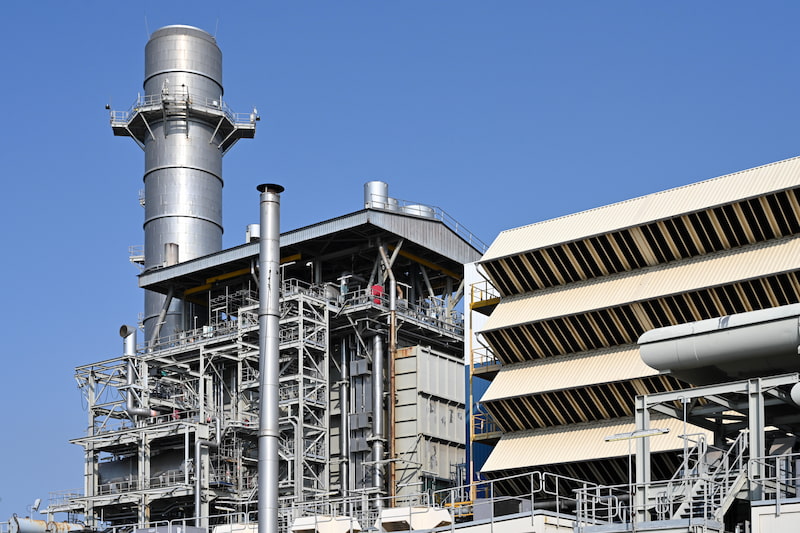
Combigolfe Thermal Power Station in Fos-sur-Mer
Flexible assets at the heart of power systems
Once primarily dedicated to continuous electricity generation, gas-fired power plants now mainly serve as support for the grid, particularly in developed countries. Capable of rapidly delivering large amounts of power, they help balance supply and demand and respond to seasonal peaks.
In emerging countries, gas-fired plants also play a key role by gradually replacing coal- and oil-fired plants, which emit up to twice as much CO₂. This is why they hold a strategic position in ENGIE’s power mix, as essential flexibility assets.
ENGIE’s gas-fired power plants represent 41 GW of installed capacity, accounting for 45% of ENGIE’s power generation mix. They actively contribute to security of energy system, alongside renewable energy and storage solutions (battery storage and pumped hydro). Primarily located in the Middle East (51%) and Europe (35%), with additional capacity in Latin and North America, they are fully aligned with our industrial strategy and our “well-below 2°C” climate ambition, certified by the SBTi in 2023.
More efficient, more flexible and lower-emission power plants
ENGIE has launched a large-scale modernization program for its thermal fleet to meet the highest standards in performance, flexibility and emissions reduction.
These assets mainly consist of combined-cycle gas turbines (CCGT) and open-cycle gas turbines (OCGT, see below), complemented by cogeneration units that simultaneously produce electricity and heat for industrial and tertiary sites.
Latest-generation CCGTs – such as the new Flémalle plant in Belgium, or the upgraded Combigolfe plant in southern France and Maxima in the Netherlands — illustrate ENGIE’s investments in this area:
- They achieve efficiency (*) close to 60%, compared with 55% for conventional CCGTs, reducing gas consumption and therefore CO₂ emissions for the same level of output.
- Their output can be adjusted rapidly in response to early signs of grid stress.
- They are designed to integrate an increasing share of renewable gases (hydrogen, biomethane, synthetic methane), which are expected to progressively replace natural gas as technologies evolve.
(*) Efficiency of a gas-fired power plant: ratio between the electrical energy produced and the energy contained in the gas consumed to generate it.

Three gas-fired power plant technologies
Combined-cycle gas turbines (CCGT) combine a gas turbine and a steam turbine. Gas combustion drives the first, while the heat from exhaust gases powers the second. This dual cycle recovers otherwise lost thermal energy, increasing overall efficiency.
Open-cycle gas turbines (OCGT) burn gas in a turbine that directly drives a generator. Their simple design enables rapid start-up, making them well suited to short-term grid support when flexibility is more important than efficiency (typically 35–40%, compared with 55% or more for CCGTs).
Cogeneration plants simultaneously produce electricity and heat by recovering thermal energy that would otherwise be lost. This combined production significantly improves overall efficiency compared with conventional power plants.
Find instantly answers to your questions
What do you want to do?