




ENGIE, a global leader in onshore and offshore wind energy
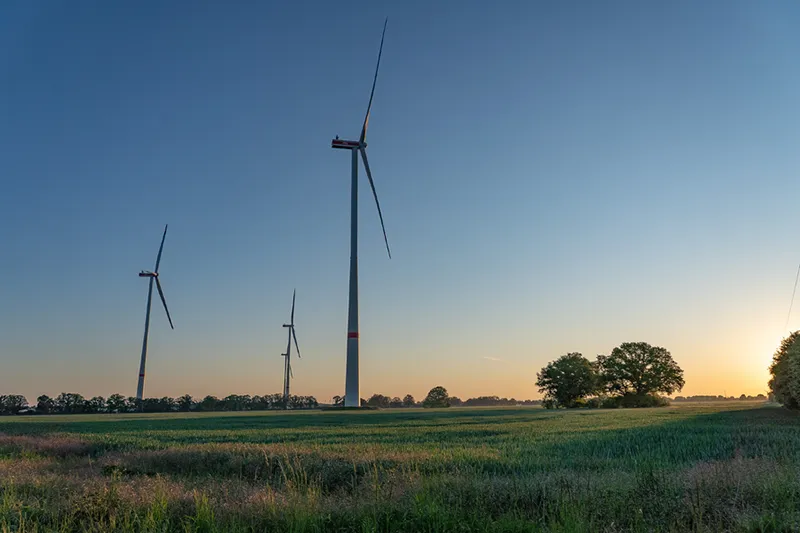
With nearly 20 GW installed across around twenty countries, ENGIE is a leading player in wind energy, a competitive and mature renewable technology at the heart of the energy transition. We design, build and operate onshore and offshore wind farms, supporting territories in their decarbonization.
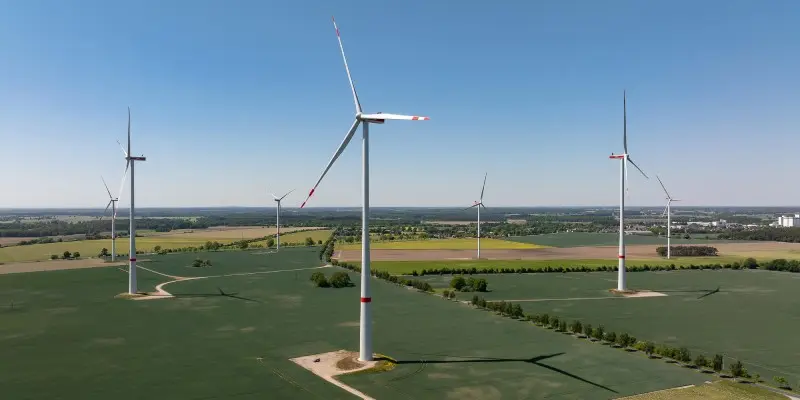
Our wind projects contribute to our objective of 95 GW of installed renewable and storage capacity by 2030. ENGIE is among the world’s major renewable energy players, with 57.2 GW of renewable capacity in operation as of 30 September 2025, including 17 GW of onshore wind and 2.747 GW of offshore wind.
Large-scale projects
Through the development and operation of wind farms, ENGIE contributes to the energy security and sovereignty of territories. Our largest onshore wind project, commissioned in December 2025, is located in Serra do Assuruá, Brazil. With an installed capacity of 846 MW, close to that of a nuclear reactor, it is one of the largest wind farms in Latin America. We also operate the largest wind farm in the Middle East and Africa, Red Sea Wind Energy. With a capacity of 650 MW, it supplies renewable electricity to more than one million households in Egypt.
For offshore wind, ENGIE relies on Ocean Winds. Created in 2019, this joint venture owned 50/50 with the Portuguese energy company EDP Renewables has a global portfolio of 16 offshore projects reaching around 21 GW in operation, construction or development across eight countries.
ENGIE is also very active in the Power Purchase Agreement (PPA) segment linked to wind farms.
Digital technologies to forecast and optimize production
Digital technologies and data analytics enable us to optimize our operations. Our proprietary Darwin platform collects and analyzes operational and weather data in real time. Our digital tools forecast production from D+1 to D+10 and optimize site operations, improving the capacity factor of installations and reducing downtime.
A rapidly growing market
Wind energy has the advantage of being inexhaustible, locally available and low-carbon. Fast construction is another key advantage for the sector, with construction times ranging from 12 to 24 months for onshore wind farms. Costs are also highly competitive. According to the International Energy Agency, onshore wind remained the most affordable source of electricity generation for new capacity worldwide in 2024, with an average levelized cost of electricity of $0.034 per kWh, followed by solar photovoltaics and hydropower.
At the end of 2024, global installed wind capacity reached around 1,136 GW, including 520 GW in China and 154 GW in the United States, according to the Global Wind Energy Council (GWEC). The vast majority corresponds to onshore wind. Along with hydropower and solar energy, it is one of the most mature and widely deployed renewable technologies worldwide.
No fewer than 55 countries installed wind turbines in 2024, a record year for new installations with 117 GW added (including 109 GW onshore and 8 GW offshore). The trend continues to accelerate. In the first half of 2025, new installations increased by 64% compared with the same period in 2024, rising from 44.1 GW to 72.2 GW.
Offshore wind turbines benefit from stronger and more consistent winds, producing more electricity than onshore installations. Electricity is collected offshore and transmitted onshore via a substation and submarine cables.
Between 2010 and 2024, offshore wind installation costs decreased by 48%, resulting in a 62% reduction in the levelized cost of electricity (LCOE) over the same period, according to the International Renewable Energy Agency (IRENA).
Deployed at large scale since the beginning of the 21st century, the first generations of wind turbines are now reaching the end of their operational life. A significant share of these installations will gradually be dismantled or replaced by next-generation wind farms, a process known as repowering. Most wind turbine components are almost entirely recyclable.
Wind energy production, like solar generation, varies throughout the day depending on weather conditions. To manage these fluctuations, grid operators rely on flexibility solutions, a key pillar of ENGIE’s strategy.
Three technologies: onshore wind, fixed-bottom offshore wind and floating offshore wind
Onshore wind relies on mature technologies and is one of the lowest greenhouse gas-emitting renewable energy sources. We develop onshore wind farms in around twenty countries. Our projects include environmental studies, monitoring and consultations carried out before, during and after construction with local stakeholders. They generate economic activity and tax revenues for local communities.

Fixed-bottom offshore wind consists of anchoring turbines to the seabed, a technique suitable for shallow coastal areas. This type of project is currently the most common offshore wind technology, representing the majority of the 83 GW of offshore wind capacity installed worldwide by the end of 2024.
In France, ENGIE is building two fixed-bottom offshore wind farms (Îles d’Yeu–Noirmoutier and Dieppe–Le Tréport) with a total capacity of nearly 1 GW. Across all continents, Ocean Winds, our joint venture with EDP Renewables, is developing projects each exceeding 500 MW.

Floating wind uses floating structures anchored to the seabed by cables, allowing turbines to be installed in deeper waters where fixed foundations are not feasible, often further offshore. The main advantage of floating technology is that it opens up vast marine areas with strong winds that were previously inaccessible, expanding the potential for offshore wind deployment.
In Portugal, Ocean Winds operates WindFloat Atlantic, a 25 MW floating wind farm composed of three 8.4 MW turbines. It is located about 20 km off the coast of Viana do Castelo and anchored at a depth of around 100 meters.
Ocean Winds is also building or developing floating wind farms in France (Eoliennes Flottantes du Golfe du Lion – 30 MW and a 250 MW project in the Mediterranean Sea) and South Korea (Korea Floating Wind – 1,200 MW).

Environmental impacts
Protecting biodiversity is part of ENGIE’s environmental and societal responsibility, and the Group adopts a responsible approach to its wind projects. ENGIE created the Sustainable Energy Transition (TED) label with Bureau Veritas, which certifies its onshore wind farms by verifying the rigorous implementation of our commitments from design to decommissioning. Since 2022, our objective has been to make this label a benchmark across all countries where we operate in onshore wind and solar energy. To date, 11 countries representing nearly 85% of our installed capacity worldwide have been audited and certified: South Africa, Belgium, Brazil, Chile, Spain, United States / Canada, France, India, Italy and Mexico.
For offshore wind farms, ENGIE conducts seabed studies and monitoring, aerial monitoring and GPS tracking to manage environmental risks. We have also signed the UN Sustainable Ocean Principles Charter, which commits economic stakeholders to protecting seas and oceans. We work closely with scientific partners on our offshore wind projects. ENGIE also applies the “avoid, reduce, compensate” principle, which is central to our commitments under Act4Nature, a biodiversity initiative led by French multinational companies since 2018. In practice, we assess the potential impacts of our activities in order to avoid them where possible, reduce them where necessary and compensate for any residual impacts.

Discover also
Find instantly answers to your questions
What do you want to do?