




Biomethane, hydrogen: ENGIE’s strategy in decarbonized gases
Because no single energy source can, on its own, ensure a reliable and affordable energy transition, renewable gases – also known as “green gases”- will play a significant role in the future energy mix. We are present across the entire value chain, from production to distribution and sales, including storage and transport, and rank among the top 10 biomethane producers in Europe.
Renewable gases, in their various forms – from renewable methane (biogas, biomethane, synthetic gas) to renewable hydrogen and its derivatives – as well as natural gas combined with carbon capture and storage (CCS), will play a key role in achieving carbon neutrality. In ENGIE’s decarbonization scenario for Europe by 2050, these solutions could represent 32% of the European energy mix, compared with 48% for electricity, 15% for biomass, residual heat and geothermal energy, and 5% for fossil fuels.
The benefits of green gases
- After processing, biomethane has characteristics similar to natural gas, allowing it to be integrated into existing networks and storage facilities while limiting the need for new infrastructure. The development of hydrogen, meanwhile, is based on a gradual evolution of gas infrastructure to support its safe deployment.
- Their production creates jobs and contributes to greater energy independence for territories. Biomethane production also recovers agricultural and agri-food waste, in a circular economy approach.
- Gas can be stored easily and in large quantities, contributing to the flexibility of the energy system. Renewable hydrogen can also store surplus electricity.
- Green gases make it possible to decarbonize industrial uses that are difficult to electrify, as well as transport (for example, maritime transport). Sectors such as fertilizers, chemicals and steelmaking are particularly interested in the high energy density of green hydrogen.
ENGIE, a key player in biomethane
Our ambitions in green gases

Understanding Biomethane Purchase Agreements in 2 minutes 30
Biomethane
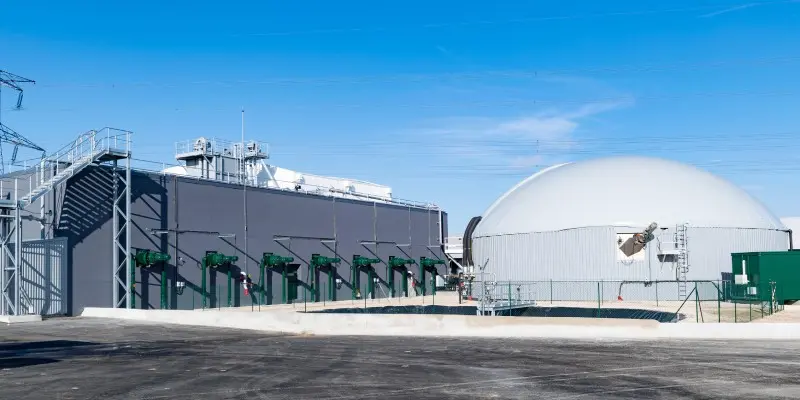
As the leading biomethane producer in France, with 22 production units and 15 additional projects under development or financing, ENGIE is expanding this activity across Europe: 4 production units in the United Kingdom, 2 in the Netherlands and 1 in Belgium.
With an installed production capacity of 1.2 TWh/year at the end of 2025, ENGIE is among the leading biomethane players in Europe.
In biomethane supply, we have signed long-term contracts (Biomethane Purchase Agreements or BPAs) with multinational companies such as PepsiCo and chemical companies Arkema and BASF. These agreements enable industrial customers to green their gas consumption, reduce their carbon footprint and gain greater visibility over their costs, as prices are set in advance.
A long-standing player in the gas sector, ENGIE is looking to the future. Its researchers, some of whom collaborate with leading institutes such as INRAE, are working on optimizing methanization processes, carbon capture, and the treatment of complex feedstocks (wood, plastics, sewage sludge) through pyro-gasification and hydrothermal gasification. ENGIE also leverages collaborations with innovative companies through its investment fund ENGIE New Ventures.
ENGIE has made a public commitment to limit the use of dedicated crops for biogas production. Land specifically used for energy crops must represent less than 10% of inputs in our new facilities across Europe and across all our biomethane assets. We prioritize waste and residues while avoiding negative impacts on food production, land use and biodiversity.
Renewable and low-carbon hydrogen
According to the International Energy Agency (2025), low-carbon hydrogen production is expected to increase fivefold between 2024 and 2030, reaching 4.2 million tonnes per year. Although this target is less ambitious than initially projected in the early 2020s, it still reflects strong growth.
Building on its long-standing expertise in both gas and electricity, ENGIE has all the capabilities required to support the decarbonization of industry and mobility through renewable hydrogen.
This is illustrated by the HyGreen project in Provence, which aims to build a 240 MW plant by 2031 to decarbonize high-emission industries located in the Fos-sur-Mer port area. The facility will produce 30,000 tonnes of renewable hydrogen per year from 2031, avoiding more than 300,000 tonnes of CO₂ emissions annually. The hydrogen produced by HyGreen will be stored in underground salt caverns and connected to a hydrogen network extending to the German border.
Another example: ENGIE has built in Toulouse-Blagnac the first European station for the production, storage and distribution of green hydrogen located on an airport site. The hydrogen is intended for the airport’s bus fleet, as well as for individual mobility.
Find instantly answers to your questions
What do you want to do?