




Our Net Zero Carbon 2045 Trajectory
Our Net Zero Carbon 2045 ambition, embedded at the heart of our strategy, guides all our industrial, financial and operational decisions. It is based on a massive reduction in our emissions, the expansion of renewable energy, the development of green gases and flexibility solutions that are essential for a decarbonized, reliable and affordable energy system.
A strategic direction built on three pillars
ENGIE has structured its Net Zero Carbon trajectory around three interdependent pillars:
- Reduce: cut our greenhouse gas (GHG) emissions by at least 90% by 2045 across scopes 1, 2 and 3.
- Absorb: address residual emissions through carbon capture solutions or carbon sinks.
- Avoid: support our clients and partners in reducing their own emissions through our low-carbon solutions and infrastructure.

Operational levers supporting our trajectory
Phasing out coal
- End of coal sales since 2019
- End of coal-based power generation since 2025 in continental Europe
- End of coal-based power generation worldwide by 2027, following the merit order: plant closure, conversion and finally divestment of coal assets
Reducing and decarbonizing gas consumption and sales while developing renewable and low-carbon gases
- Biomethane production (10 TWh by 2035) and hydrogen production (4 GW by 2035)
- Reduction in volumes consumed by gas-fired power plants (through lower load factors and fleet reduction) and in gas sales
- Decarbonization of the remaining gas-fired power plants, mainly between 2030 and 2045 (biomass, biomethane, hydrogen, CCS)
- Sales of biomethane and hydrogen
Decarbonizing electricity and heat production, sales and consumption
- Renewable electricity generation (95 GW by 2030, including storage)
- Production of renewable, low-carbon or recovered heat (20 TWh by 2030)
- Support for electrification (300 TWh of electricity sales by 2030, B2B and B2C) and decarbonization of the electricity sold
Supporting the transition of energy infrastructure
- Transition of existing gas infrastructure: methane emission reduction and biomethane injection (50 TWh connected by 2030)
- Development of electricity infrastructure (10,000 km by 2030)
- Expansion of energy supply flexibility: batteries and pumped-storage hydropower (95 GW by 2030, including generation), and OCGT
- Development of low-carbon mobility infrastructure and technologies (desalination, heat pumps)
Integrated management of carbon and financial performance
ENGIE has implemented an integrated management framework combining financial and carbon performance. This approach goes beyond traditional financial reporting by establishing a management model based on “double capital” accounting (financial and carbon). This system enables all operational and strategic decisions across the Group to be aligned with ENGIE’s ambitions for the energy transition and carbon neutrality.
This management framework relies on:
- Long-term strategic projection tools, including the setting of CO₂ emission reduction targets and the development of a carbon Medium-Term Plan, ensuring consistency between the Group’s financial and climate trajectories.
- Intra-year operational monitoring, through quarterly performance reviews that enable continuous adjustment of actions and monitoring of target achievement.
The systematic use of carbon budgets across ENGIE ensures that climate impact is fully integrated into investment decision-making. Each project is therefore assessed based on both its economic profitability and its contribution to ENGIE’s Net Zero trajectory.

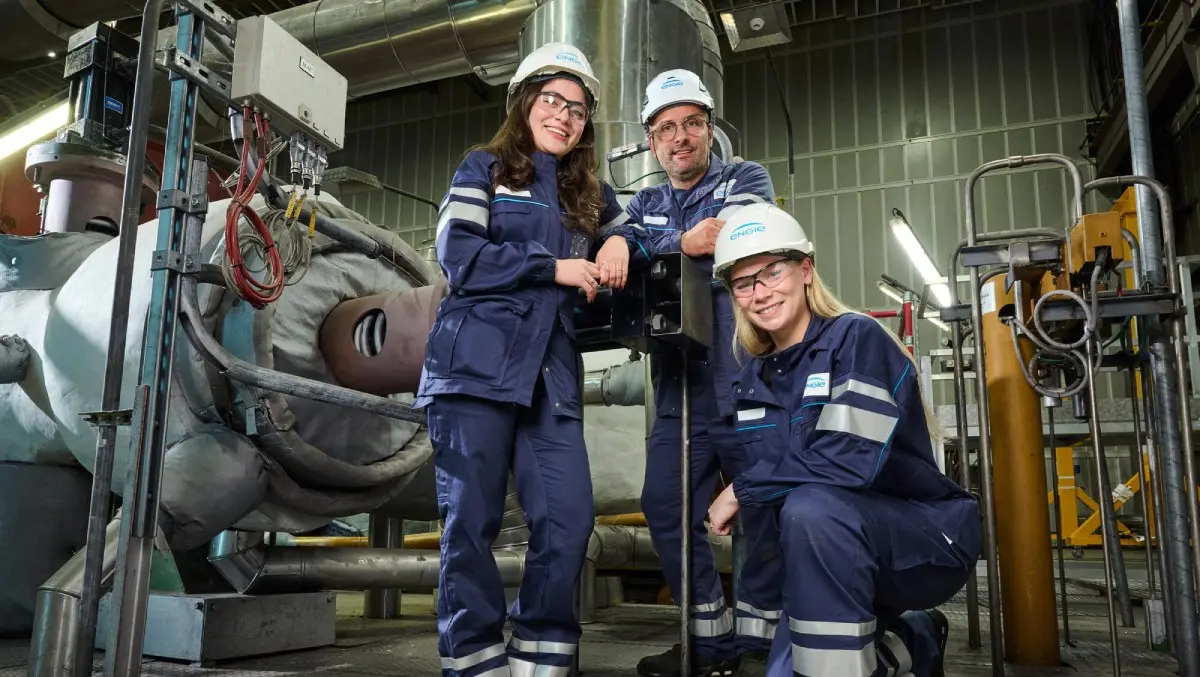
ENGIE energy and water production facility for Milupa (Danone), Fulda, Germany
Supporting the decarbonization of our clients and suppliers
ENGIE’s responsibility extends beyond its operational boundaries to mobilize its entire ecosystem – partners, clients and suppliers – towards carbon neutrality. We offer our clients energy efficiency solutions and green energy supply to target 65 to 85 million tonnes of CO₂ avoided annually by 2030. For our partners, we aim for 250 of our top suppliers to be engaged in a decarbonization trajectory aligned with ENGIE’s by 2030.
Sustainability statement and vigilance plan
07.03.2026 – 7.9 Mo
ENGIE Climate policy
23.02.2025 – 174.4 Ko
Climate review of trade associations 2024
26.09.2024 – 1.3 Mo
Find instantly answers to your questions
What do you want to do?