

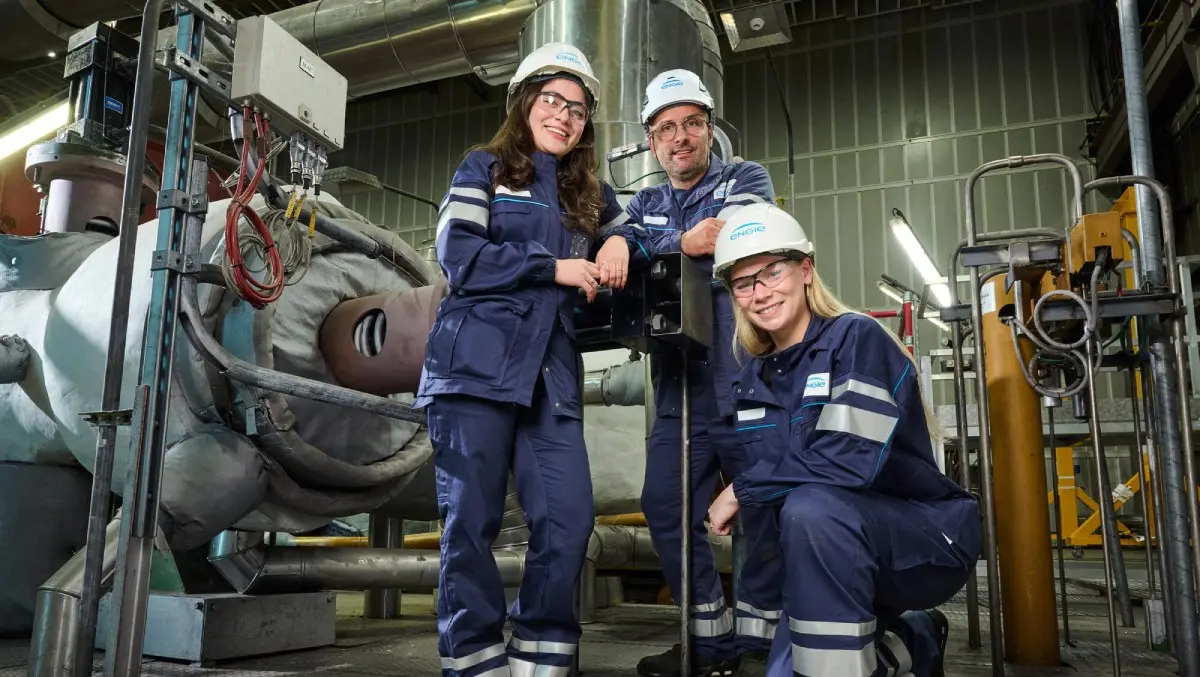



ENGIE, a European leader in gas distribution networks, committed to scaling up biomethane
A standalone subsidiary of ENGIE, Gaz Réseau Distribution France (GRDF) is the historical operator of gas distribution in France. Building on this expertise, ENGIE also operates gas distribution networks in Romania and Mexico, and holds stakes in networks across several major German cities. Today, our infrastructure is evolving to fully integrate renewable gases that will contribute to a decarbonized energy system.
Gas distribution is one of ENGIE’s historical activities in France. As the final link in the gas value chain, it ensures continuity between the transmission network and delivery points or meters for end users: households, professionals, businesses, commercial buildings and public authorities. In France, this role is carried out by our subsidiary GRDF. This independent and regulated company operates the largest gas distribution network in Europe, spanning more than 200,000 km.
After supporting France’s economic development since the 1960s, the gas distribution network is now evolving to support the energy transition. ENGIE is working along two main lines:
- improving network performance through continuous investment in maintenance and modernization
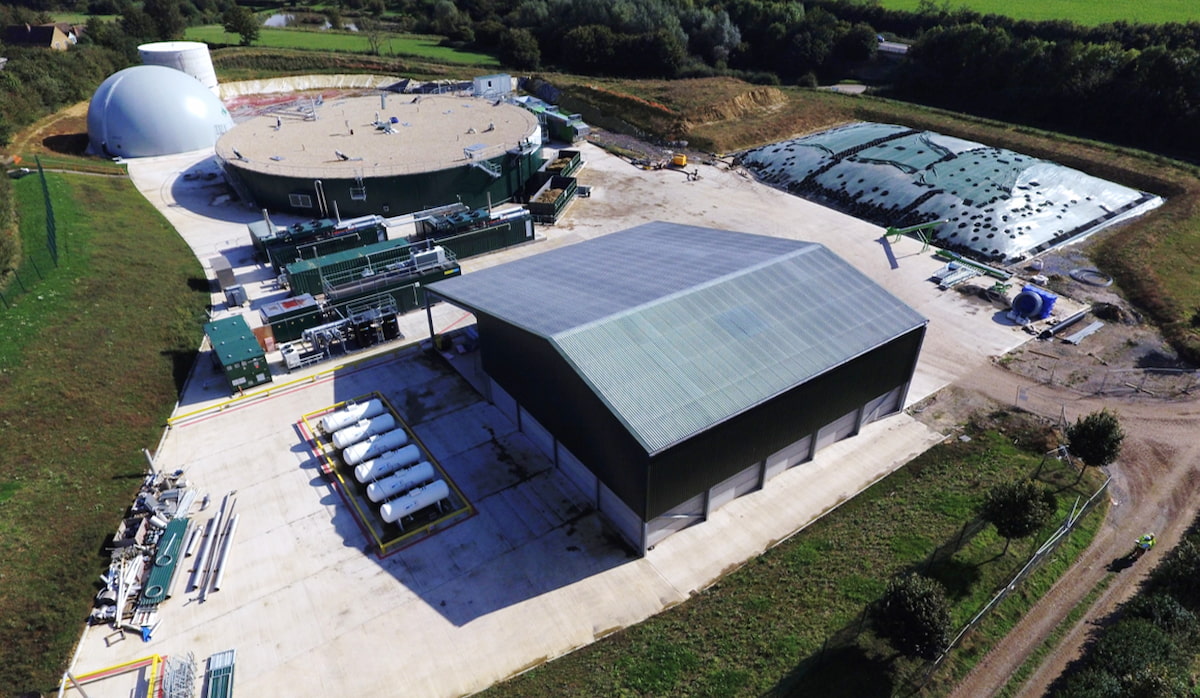
- developing biomethane injection sites, a cornerstone of renewable gas expansion
ENGIE also operates gas distribution networks internationally, with Distrigaz Sud Rețele, Romania’s leading network (24,500 km and more than 2 million customers), and a 32% stake in Germany’s GASAG, a historic energy distribution player in Berlin and Brandenburg. In Mexico, ENGIE operates eight local distribution companies serving nearly 686,784 customers through a 14,218 km network located in key economic regions (Bajío, México, Jalisco, Puebla-Tlaxcala, Querétaro, Reynosa-Matamoros, Tampico and Mérida).
ENGIE’s gas distribution networks in figures (2025)
An international benchmark in renewable gases
In France, leveraging the gas network operated by its independent subsidiary GRDF, ENGIE is supporting the growth of biomethane, now a key pillar of its decarbonization strategy. By the end of 2025, 674 injection sites were connected to the distribution network, supplying the equivalent of more than 1.5 million households. This renewable production accounted for 7% of the gas transported by GRDF in 2025. As biomethane shares similar characteristics with natural gas, it can be injected into the same networks.
France benefits from a vast and still underexploited biomass resource (agricultural, forestry and waste-based), offering significant potential for biomethane production. This growth is supported by the introduction, on January 1, 2026, of the CPB scheme (Biogas Production Certificates), which will enable the sector to become self-financing. These favorable conditions reinforce ENGIE’s target of 44 TWh of biomethane, representing 20% of the gas distributed in France by 2030, in line with the national energy roadmap published in February 2026.
Committed alongside farmers – who account for 85% of methanization facilities – GRDF supports the emergence of a virtuous circular model that contributes to energy sovereignty. According to the European Biogas Association, France is the most dynamic market in Europe.
Emissions halved by 2030
In 2025, ENGIE continued investing in the maintenance and modernization of its networks, with nearly €600 million allocated in particular to the deployment of smart meters – such as Gazpar in France, now almost fully rolled out – as well as sensors and real-time monitoring systems to improve performance and reduce losses.
Thanks to these innovations and the integration of renewable gases, we aim to halve CO₂ emissions from the French gas distribution network by 2030.
A partner for local communities
As a regulated activity, gas distribution ensures non-discriminatory access to the network for all gas suppliers and biomethane producers. This public service mission is carried out under long-term concession agreements – up to 30 years – with local authorities, which oversee, regulate and monitor their proper execution.
Gas distribution generates employment and contributes to public finances through taxes and fees associated with this public service mission.
Discover also
Find instantly answers to your questions
What do you want to do?